








Bai Tinh: How a Zero-Fee Golf Course Could Become a Unique Tourism Asset for Cao Bang
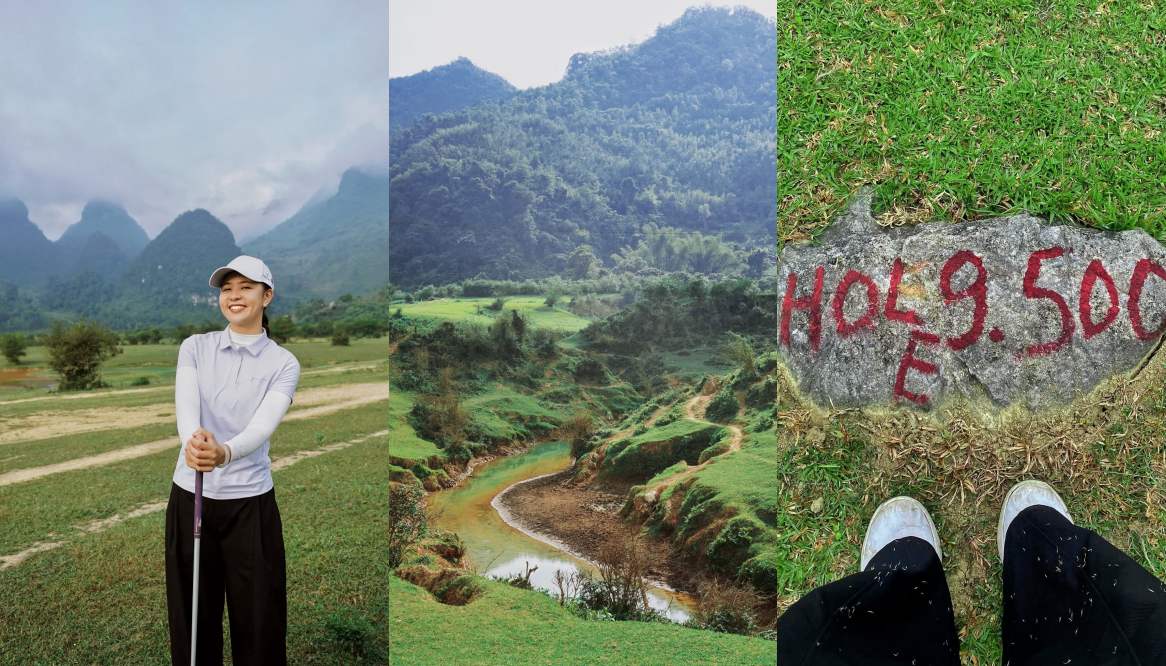
Golfers share the land with local villagers, walk past herds of buffalo grazing freely across the fairways, and play a course shaped almost entirely by what nature has provided.
This is Bai Tinh, located in Thanh Long Commune, Cao Bang Province – recently recognized as Vietnam’s first community golf course.
Following her visit to Bai Tinh, Nguyen Thi Thu Ha, Vice President of the Vietnam Golf Association, described the experience with an intriguing phrase: “zero-cost golf tourism in Cao Bang.”
The idea of “zero cost” may sound simple, but behind it lies a much larger story about golf, local communities, sustainable tourism and a destination unlike almost anything else in Vietnam.
A golf course designed by nature
Covering approximately 100 hectares, Bai Tinh was originally a natural open area used by local communities for grazing livestock. Surrounded by mountains, its relatively flat terrain, natural grasslands, streams, depressions and indigenous vegetation gradually provided the foundation for what has become an 18-hole golf course.
What makes Bai Tinh extraordinary is that instead of reshaping nature to build a golf course, golf has adapted itself to the landscape.
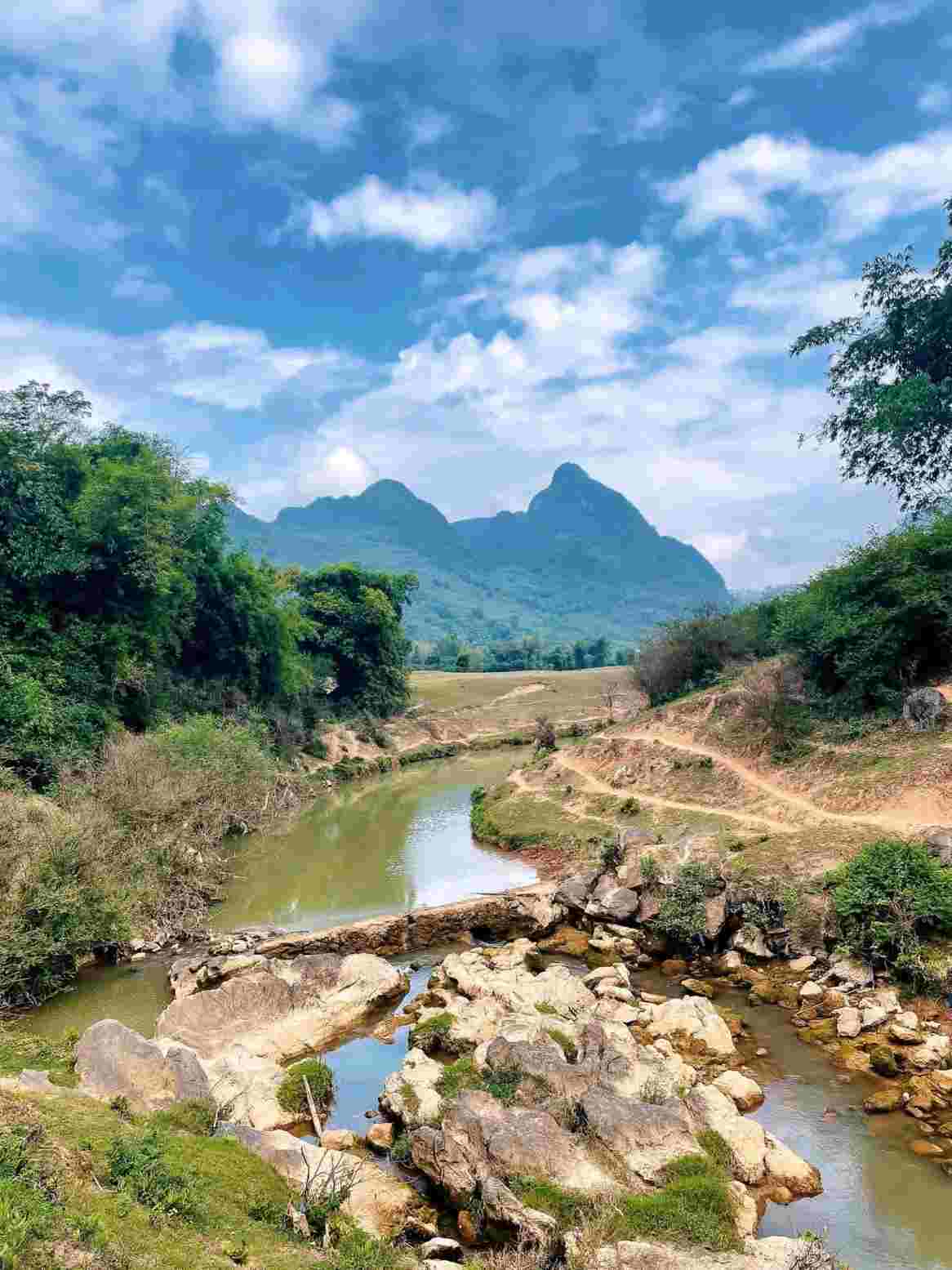
According to Nguyen Thi Thu Ha, Bai Tinh resembles a giant natural basin surrounded by mountains. Several times a year, water floods parts of the area. When it recedes, streams, ponds and natural hazards emerge across the land. Bamboo, native bushes, uneven ground and wild grass all become part of the golf strategy.
Even course maintenance follows a model that would be almost unimaginable at a modern golf resort. Buffaloes graze freely across Bai Tinh every day. They remain an essential part of traditional rural life, but at the same time effectively serve as the course’s natural “lawnmowers”. The sight of buffaloes wandering across a fairway is not staged for tourists. It is simply part of everyday life here.
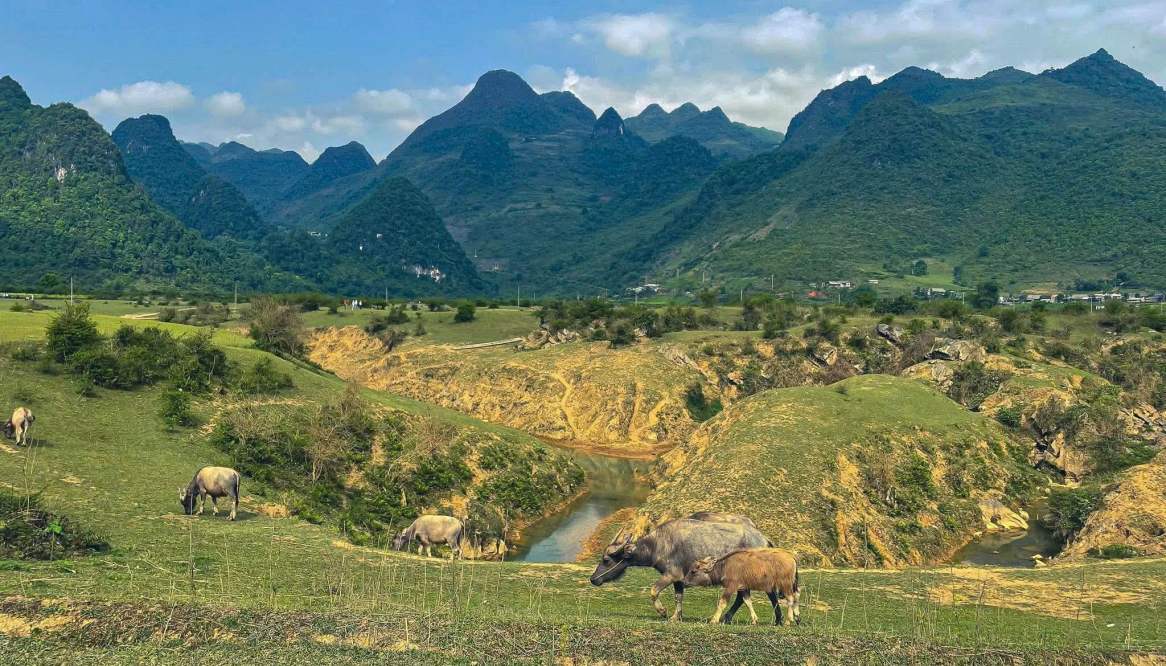
Nguyen Ngoc Chu, former Secretary General of the Vietnam Golf Association, who has experienced nearly 1,000 golf courses during more than three decades in the game, offered perhaps the most fitting description of Bai Tinh:
“This is the only golf course where the principal designer is Mother Nature.”
It is difficult to find a better way to describe it.
A round unlike any other
Bai Tinh does not offer golf in the conventional sense. First-time visitors – and sometimes even those who have played the course more than once – may struggle to find their way from one hole to another without a local caddie.
There is no sophisticated signage system. At several holes, information may simply be written on stones protruding from the ground. White, blue and red tee markers are indicated through similarly simple, handmade signs. The greens are just as unconventional.
There are no perfectly manicured boundaries separating greens from their surroundings. As Nguyen Thi Thu Ha observed during her visit, golfers may identify a green by a white painted line circling an area of grass – drawn in the wonderfully instinctive manner of Bai Tinh’s own “technical staff”.
Yet these apparent imperfections are exactly what define the experience. At Bai Tinh, golfers do not simply read the green. They must read the landscape. They do not only calculate yardages. They observe the ground, streams, bushes, mountains and natural contours. A round becomes as much an exploration of the environment as a test of golf.
At one point, golfers, local villagers and buffaloes may even find themselves crossing the same makeshift bridge damaged by the previous flood before continuing towards the next hole. It is picturesque yet primitive, innocent yet unpredictable, instinctive yet challenging.
That may well be Bai Tinh’s true signature.
A golf course without green fees
If there is one feature that makes Bai Tinh particularly significant within Vietnamese golf, it is the way the course exists alongside its community.
There is no conventional green fee. Golfers primarily tip their caddies. And those caddies are local ethnic minority residents. They grow rice, cultivate tobacco, raise livestock and, when golfers arrive, carry golf bags around Bai Tinh.
When farm work is finished or there are no visitors, some of them play golf themselves. As a result, the traditional distinction between someone who “works in golf” and someone who “plays golf” becomes blurred.
Golf at Bai Tinh is not confined behind the gates of a private resort. It has become part of everyday community life.
A farmer can play after finishing work in the fields. Local children can encounter golf without entering an expensive resort. Young people can discover the sport without many of the financial barriers traditionally associated with it.
On October 3, 2026, Bai Tinh was officially recognized as Vietnam’s first community golf course. That recognition means considerably more than another title. It acknowledges an entirely different way of thinking about golf.
From “zero-fee golf” to a distinctive tourism product
Bai Tinh does not have to remain an experience known only to golfers in Cao Bang. From Nguyen Thi Thu Ha’s perspective, the course has the potential to become part of Cao Bang’s tourism itineraries for both domestic and international visitors.
Cao Bang already possesses some of northern Vietnam’s most remarkable natural and cultural attractions. Adding a day of golf at Bai Tinh to an itinerary exploring the province could create a tourism product very different from the conventional golf-resort experience.
Modern golf travellers do not exclusively search for flawless championship courses.
Many collect experiences. They travel for links golf in Scotland, desert golf in the Middle East, mountain golf at altitude and community courses deeply connected to local culture.
Bai Tinh has the potential to enter that conversation precisely because of its imperfections. No luxurious clubhouse can become part of the appeal. No golf carts mean players actually walk through the landscape. No fleet of mowing machines creates the unforgettable story of buffaloes maintaining the fairways. No green fee allows a sport often perceived as expensive and exclusive to become accessible to the local community.
And a course without a famous architect may prove more memorable because its architect is the landscape of Cao Bang itself.
Do not turn Bai Tinh into an ordinary golf course
This may ultimately become the most important question surrounding Bai Tinh if it develops into a golf tourism destination. The course certainly needs improvement.
Access routes and bridges should be made safer. Directional signage can be improved. Safety measures for golfers, villagers and livestock need to be carefully considered. Basic services involving caddies, sanitation, first aid and visitor facilities can also be developed.
But development should not mean overdevelopment.
Bai Tinh would risk losing its identity if it were transformed into another conventional commercial golf course. That distinction must be protected. Vietnam can build many more modern golf courses, but it would be extremely difficult to create another Bai Tinh.
Its value does not depend on perfectly manicured fairways, the speed of its greens or the luxury of its clubhouse.
Its value lies in the possibility that a golfer can stand among the mountains of Cao Bang, watch buffaloes grazing ahead, receive guidance from a local farmer working as a caddie, and hit a golf shot across a landscape where ordinary rural life continues uninterrupted.
A round of golf here may cost zero dong. The experience, however, is far more difficult to put a price on.
If preserved and developed with sensitivity, Bai Tinh could become a distinctive new symbol of golf tourism in Cao Bang – not by transforming nature into a golf course, but by allowing visitors to discover a golf course that nature seems to have created long before anyone thought of playing the game here.
GolfEdit.com






Comments
You must be logged in to comment.