







Wyndham Clark and the watery birdie: when knowing the rules becomes an advantage
1. The 2019 Rule Change: A shift many golfers still haven’t adapted to
For decades, water hazards came with a nearly instinctive mindset:
- No grounding the club.
- No practice swings touching the water.
- No accidental contact of any kind within the hazard.
But in 2019, the USGA and R&A completely redefined this philosophy. Hazards were no longer called “hazards”; they became penalty areas.
Inside a penalty area, players are allowed to: Ground the club, touch the water or ground during practice swings, move loose impediments, set the club behind the ball as normal
The only restriction: you may not improve the conditions affecting the stroke.
The intent was to make the rules simpler, but it created a gap: many golfers—even at a high level—still behave as if the old rules apply.
Wyndham Clark was not one of them. He leveraged the new rules to their fullest.
2. What Clark did — and why it was brilliant
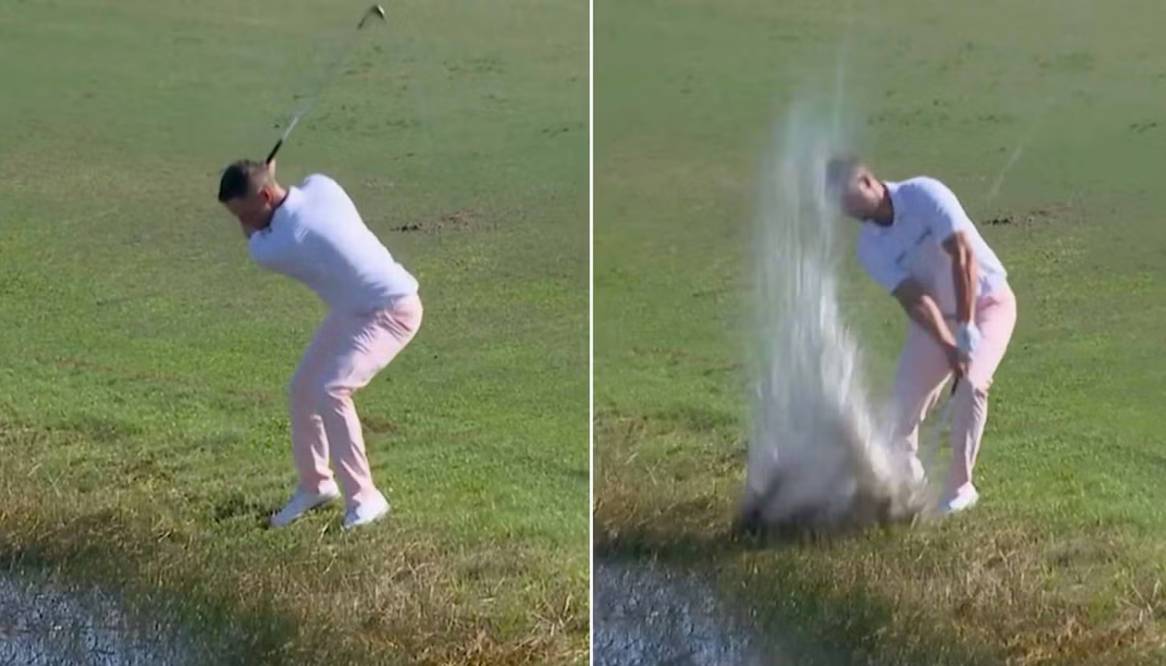
Before hitting the actual shot, Clark stepped a few feet back into the water and made several aggressive practice swings, splashing water with the clubhead.
Why?
He wanted to:
- Feel the resistance of the water on the clubhead
- Assess how the club would travel through the water
- Judge the entry angle and the expected rebound
Determine timing, speed, and how much the water would slow the strike
Most importantly: he knew the rules allowed him to do this.
Armed with that information, Clark executed a clean strike, launching the ball high and leaving it just 25 feet from the pin.
A birdie from a submerged lie like that is not luck. It is the product of rule awareness, courage, and adaptability.
Typically, with a partially submerged ball from 60 yards, most golfers would take a penalty drop. But for Clark, the drop zone created its own problems: poor angle to the green, potential interference, and uncertainty about lie quality. He also needed momentum to chase Scheffler.
Hitting from the water carried risk — but the pre-shot practice swings reduced that risk dramatically, allowing him to calibrate for the exact resistance and conditions.
This is the strategy of a golfer who understands that golf is a game of probabilities — and the rules increase your probabilities if you know how to use them.


Comments
You must be logged in to comment.