






Lê Chúc An and the Bronze Medal That Opens a New Era for Vietnamese Women’s Golf
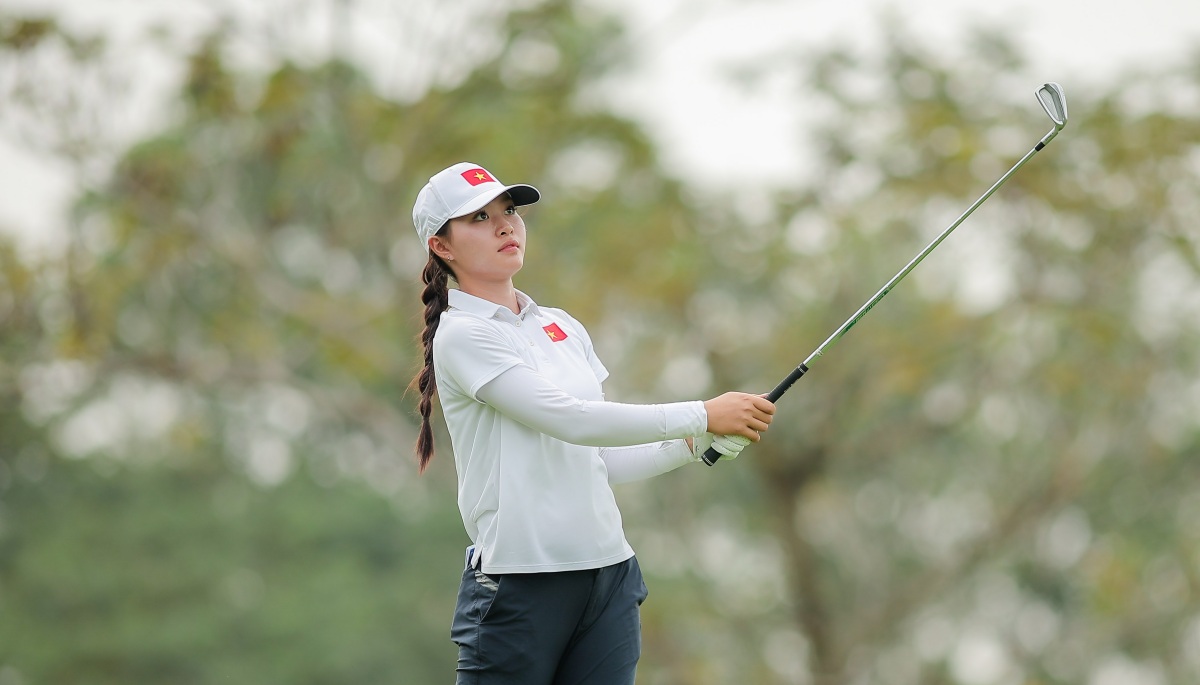
After four days of competition at SEA Games 33, Lê Chúc An finished the tournament at +5, closing with a final-round 74 (+2). It was not a breakout round, nor a low-scoring day, but it was a round defined by composure and resilience—one in which a young golfer was required to defend her position, manage mistakes, and see the tournament through in a format where every bogey could alter the outcome.
A final round defined by control
The final round at SEA Games 33 was no longer about chasing birdies at all costs. For those in medal contention, it became a test of risk management, emotional control, and accepting pars when necessary. Chúc An’s 74 (+2) perfectly reflected the nature of her day: mistakes were made, but crucially, mistakes were not allowed to compound.
Under the weight of historical pressure, finishing the tournament with a total score sufficient to remain on the leaderboard showed that Chúc An competed as a true national-team athlete, rather than merely a participant completing the field.
In reality, the race for the bronze medal was far more intense than the final leaderboard suggests. Elaine Widjaja of Indonesia applied the greatest pressure on Lê Chúc An during the final round. The young Indonesian golfer mounted an impressive charge, gradually cutting the gap to just one stroke, forcing Chúc An into a clearly defensive posture on the back nine.
The decisive turning point came at the 7th hole (the 16th of the day). Widjaja’s unexpected double bogey immediately halted her momentum and indirectly handed a decisive advantage to Lê Chúc An in the medal race. At elite level, golf is often not decided by the best shot of the day, but by who makes fewer costly mistakes at the most sensitive moments.
A medal shaped by regulation—but not by luck
It is important to acknowledge the reality: Lê Chúc An’s bronze medal was influenced by Olympic Council regulations, which limit each nation to a maximum of two medals in the same event. That rule created the opening for Chúc An to step onto the podium.
However, it would be deeply unfair to label this a “technical medal.” To be in that position, Chúc An still had to: Complete all four rounds, remain within the competitive scoring group, avoid eliminating herself through critical errors
Regulations may open the door—but only those with sufficient ability are standing in front of it when the moment arrives.
At the top of the leaderboard, Prachnakorn Prim delivered a commanding performance to secure the gold medal, while Kritchanya claimed silver, once again underlining the depth and consistency of Thai women’s golf—the dominant force in Southeast Asia.
Within that broader picture, Vietnam’s first-ever presence on the women’s golf medal podium was the most meaningful development. Not because Vietnam surpassed Thailand, but because Vietnam officially entered the conversation of competitive achievement.
The first medaland a meaning beyond the scoreboard
This is the first medal in the history of Vietnamese women’s golf at the SEA Games. There is no precedent, no benchmark for comparison. That alone gives the medal significance far beyond an individual ranking.
It confirms that:
- Vietnamese women’s golf now has a tangible achievement to build upon
- The gap to regional rivals is no longer an abstract concept
- Vietnamese female golfers can complete and compete in major multi-sport events
Vietnamese women’s golf is certainly not at its peak yet. The road ahead remains long—physical development, consistency, international experience, and squad depth all require time. But after SEA Games 33, the most important element has finally appeared: Vietnam has a women’s golf medal, and with it, hope.
Hope that Vietnamese women’s golf no longer starts from zero. Hope that the next generation will step onto the course believing: “We have done this before.”
And in the development of any golfing nation, sometimes the first step is the most important one of all.




Comments
You must be logged in to comment.