





Why Good Feel is no longer enough in golf modern data era
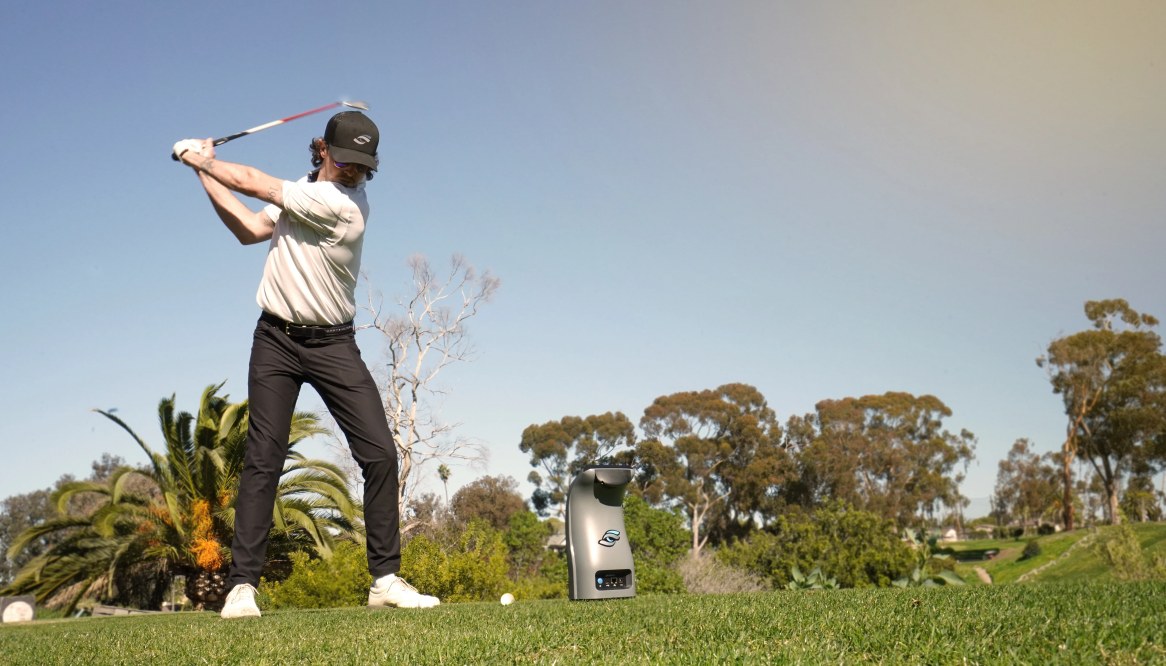
But with the rise of measurement technology—especially launch monitors such as Foresight GCQuad and GC3—the way we understand the golf swing has fundamentally changed. From “feel,” golf has shifted to “fact,” and the gap between the two is far wider than most golfers realize.
This article, based on insights from coach Mark Chambers, explains why golfers can no longer depend solely on feel and how data provides a more accurate and effective way to improve performance.
1. “Feel” — once the foundation, now no longer sufficient
Before the 1990s, when high-quality video and measurement sensors were not available, golfers and coaches had no choice but to rely on the naked eye and experience. A shot was evaluated with comments like, “It feels like the face is open,” or “I think the ball is flying higher than usual.”
But golf is a sport of extremely small margins: a face angle error of just 1–2 degrees can send the ball 5–10 meters off target. Human sensation simply isn’t precise enough to detect such micro-errors.
Today, statistics from Foresight Sports—data provider for major brands like Callaway, Titleist, Ping, Taylormade, and Bushnell—show that 80% of golfers misinterpret their own feel compared to actual data. In other words, most of what you think you are doing right… you are not actually doing.
2. Reality — data is the truth of the golf swing
Systems like GCQuad and GC3 record more than 20 parameters in 1/10,000 of a second:
-
Face Angle – determines starting direction.
-
Club Path – the root cause of slice or hook patterns.
-
Attack Angle – controls spin profile and distance.
-
Spin Rate – determines height, stability, and stopping power.
-
Impact Location – directly influences speed and ball flight.
These numbers don’t just show how you hit the ball; they explain why the ball behaves the way it does.
For example, you may feel like “I’m driving it great today,” but the data shows your impact is off-center, spin has climbed to 3,500 rpm, and your carry has dropped by 15–20 yards.
Meanwhile, professional golfers always trust the numbers first: they choose clubs based on performance, and feel comes after. The key difference is simple: data doesn’t lie.
3. When feel and reality contradict each other
A typical scenario during a fitting or coaching session:
Golfer A: “I feel like I’m hitting it really straight.”
Data: Face-to-Path is +5 degrees, producing a 20-meter slice.
Golfer B: “I think I’m hitting up on my driver.”
Data: Attack Angle = –3 degrees (hitting down), causing high spin, ballooning flight, and reduced distance.
Feel can sometimes be helpful, but it’s rarely precise enough to drive meaningful improvement. Modern golf proves that to fix a problem, you must first know the real problem.
4. Proper equipment: the underrated factor among Vietnamese golfers
Most Vietnamese golfers choose clubs based on feel or subjective advice. However, technical characteristics—loft and CG location, shaft flex and weight, club length, sweet-spot size—are what truly determine ball flight and performance.
A 15-handicap golfer using a shaft that is too stiff usually compensates with extra hand action. It may feel solid, but the data shows reduced clubhead speed, inconsistent face control, and unpredictable distance.
Professional golf has shown that equipment must match your actual swing—not your ego.
5. The driving range problem — and why data matters
Many golfers in Vietnam judge their distance at the range based on what they see. But range balls typically have lower compression, different spin profiles, and fly 10–20% lower.
That means the distance you “see” at the range is not your real distance on the course.
Practicing feel with range balls is like testing a car’s top speed with under-inflated tires: the data will always be wrong.
This is why training with a launch monitor, using real balls and realistic turf conditions, is essential for golfers wanting true performance improvement.
6. Conclusion: good golfers understand their own data
Progress happens when feel is connected to reality. A good shot is not the one that feels good—it is the one with:
-
square face angle
-
correct club path
-
optimal spin
-
repeatable carry numbers
-
stable impact location
To play better, you must know your own tendencies: your average face pattern, your path direction, your ideal driver spin, your true carry distances for every club.
Improving these metrics is the most direct path to lowering your scores.




Comments
You must be logged in to comment.