





Golf: A soft indicator of economic strength and investment vision?
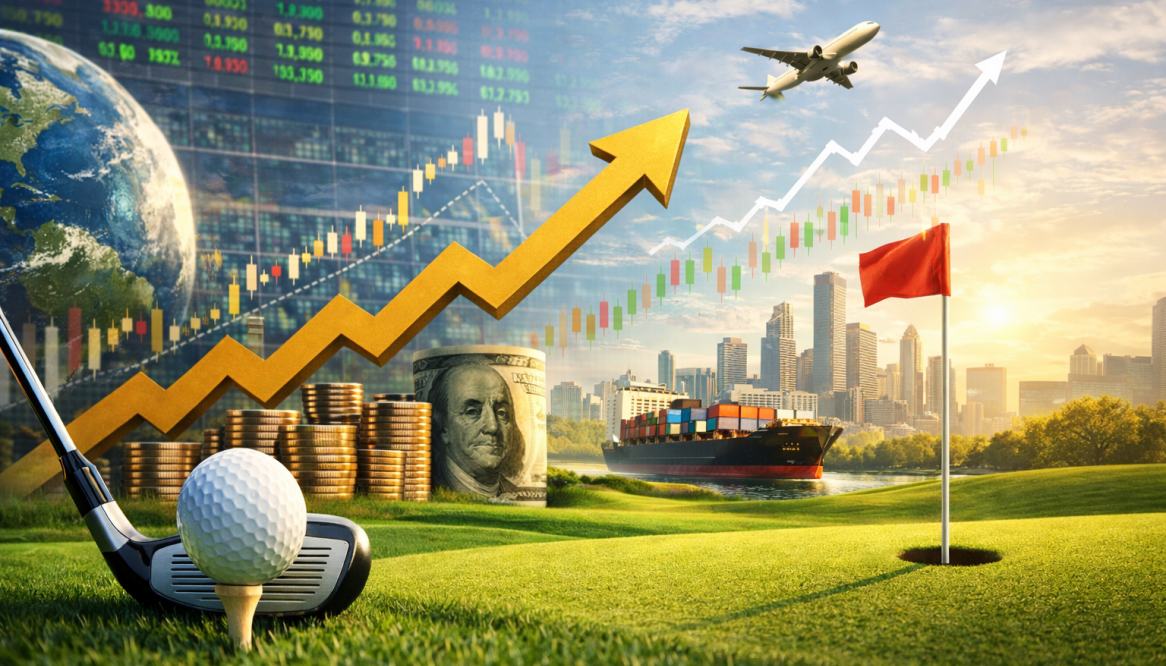
For decades, economists and policymakers have typically evaluated the health of an economy through quantitative indicators such as Gross Domestic Product (GDP), Foreign Direct Investment (FDI), the rate of urbanization, or consumer indices. However, to achieve a more comprehensive and nuanced perspective, increasing attention has been paid to so-called “soft measures”—cultural and social phenomena that reflect the underlying nature of development. In this context, it is not an overstatement to say that golf—a sport closely associated with million-dollar deals and affluent circles—is becoming a reliable indicator of a nation’s economic capacity, investment strength, and quality of life.
pasted
1. Golf as a Reflection of Economic Infrastructure and Planning
Developing a world-class golf course is far more than creating a recreational facility. It is a large-scale economic infrastructure project that requires long-term vision and substantial financial resources.
Land investment: A standard 18-hole golf course typically requires between 50 and 150 hectares of land. A country’s willingness to allocate such valuable land for high-end recreational use signals both land-resource abundance and a multi-purpose land-use planning strategy—balancing industrial, agricultural, and service development.
Supporting infrastructure investment: Golf courses rarely exist in isolation. They often serve as anchors for broader investment clusters, including five-star resorts, villas, luxury residential developments, transport connectivity, and healthcare and education services. The emergence of “golf estates” clearly demonstrates the ability to attract both private and public capital into long-term, high value-added projects.
Consequently, the density and quality of golf courses directly reflect a country’s urban-planning capacity, its ability to attract FDI into real estate and tourism, and its confidence in long-term economic prospects.
2. Golf as a Mirror of Domestic Consumption Power
Golf has long been regarded as a sport of the affluent. The cost of participation and long-term engagement is substantial: membership fees (which can reach hundreds of thousands of USD), equipment (clubs, shoes, apparel), coaching expenses, and especially golf travel to various destinations.
The rise of the upper-middle and affluent classes: Rapid growth in the number of domestic golfers (as opposed to foreign visitors) is a clear signal that the middle- and upper-income segments are expanding in scale and strengthening financially. These consumers are not only meeting basic needs but are increasingly willing to pay for premium experiences that enhance quality of life.
A proxy for luxury spending: Golf represents a form of discretionary, high-end consumption. The development of the golf equipment industry, golf fashion, and related services reflects the health of the domestic luxury market—an important signal for international investors and global brands seeking new growth markets.
In other words, the number of golfers and the revenue generated by the golf industry serve as an effective proxy indicator of purchasing power and overall household prosperity.
3. Golf as a Gateway to Global Economic Integration
Dynamic, open economies tend to attract international events, and golf is no exception.
Attracting global events and investment: Hosting tournaments on major tours such as the PGA Tour, LPGA Tour, or Asian Tour is not merely a sporting achievement—it is a significant economic event. Such tournaments attract visitors, capital flows, and global attention. International sponsors, global media, and top professional players converge, generating substantial tourism revenue while powerfully promoting the host nation’s image on the world stage at minimal direct cost.
A premium business-networking environment: Golf courses have long been regarded as the “mobile offices” of the global business community. Countries with high-quality golf facilities and services become preferred destinations for meetings, negotiations, and international partnership building. They foster an ecosystem where deals are often initiated in an inspiring and relaxed environment.
Through this lens, golf becomes an effective instrument for enhancing national prestige, reinforcing credibility, and demonstrating the depth of a country’s integration into the global economic system.
4. Golf and the Philosophy of Sustainable Investment
Today, golf is no longer viewed solely as a resource-intensive or environmentally harmful activity. With modern technology and progressive development philosophies, it is increasingly seen as a model for responsible and sustainable growth.
Green industry practices: Modern golf courses apply advanced technologies in water management (such as drip irrigation and recycled water systems), turf management, and organic fertilizers to minimize chemical use. Many courses are developed on degraded or barren land, contributing to land rehabilitation, landscape enhancement, and the creation of green buffers for urban areas.
Eco-tourism development: Golf resorts are often closely linked to nature conservation, biodiversity protection, and the provision of eco-friendly tourism experiences. This demonstrates that economic development is being pursued alongside strong resource governance and a green growth model that balances economic benefits with environmental protection.
Conclusion
Golf is far more than a game. The presence and development of the golf industry within a country represent a composite indicator of multidimensional economic strength, reflecting:
Infrastructure and planning capacity through long-term investment projects.
Domestic consumption power through the expansion of high-income population segments.
Global integration through international events and elite business-networking environments.
A sustainable development vision through green technologies and responsible resource management.
Therefore, alongside traditional macroeconomic indicators, analyzing a country’s “golf index” can provide a deeper, more tangible, and more vivid understanding of its prosperity, governance capability, and quality of life. It deserves recognition as a persuasive “soft” measure within the toolkit for assessing investment potential and long-term development

Comments
You must be logged in to comment.