





Matt Fitzpatrick: The champion of discipline, science, and data
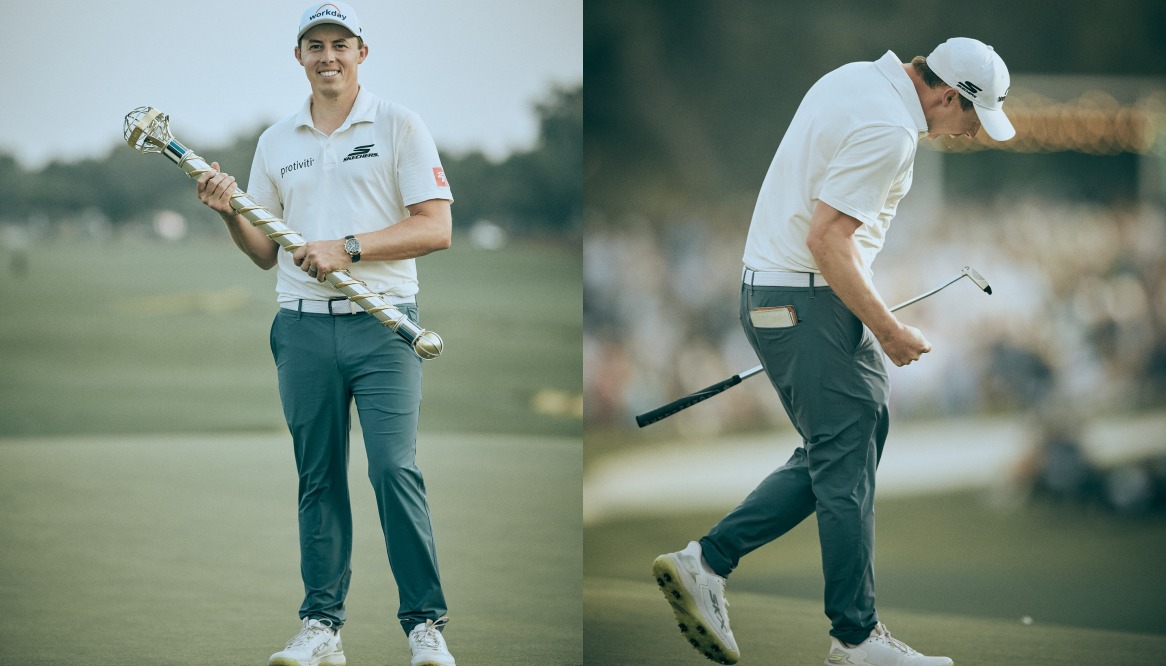
On the lush fairways of Jumeirah Golf Estates — where Rory once set immortal standards of dominance — a new story was written. Not a tale of a prodigy with explosive power and otherworldly instincts, but an ode to patience and a golfing philosophy built on discipline, science, and numbers. With his third DP World Tour Championship triumph, Fitzpatrick didn’t merely beat an icon; he established a modern model of the data-driven champion.
From Excel to AI
Fitzpatrick’s journey didn’t begin on windy practice tees, but in a quiet room illuminated by the glow of a computer screen. While other 14- or 15-year-olds chased the thrill of ball-striking, the boy from Sheffield crafted meticulous Excel spreadsheets. He logged every shot, categorised every miss, measured approaches from 125–150–175 yards, tracked fairways, iron efficiency, and even response times after each hole.
It wasn’t homework — it was conviction. A pure belief that golf should be understood through data, not just feel. Some poked fun at him for being “the only golfer who turned Excel into a Tour-level weapon,” but that very difference became his identity and shaped a rare strategic mind.
So when the wave of artificial intelligence swept into golf, Fitzpatrick was ahead of the curve. He became an early adopter of Arccos — a vast performance ecosystem built on 3.9 trillion data points and directed by the analytical architect of Ryder Cup strategy, Edoardo Molinari. There, Fitzpatrick found his true language.
He used Arccos Pro Insights as his pre-tournament engine: simulating strategies hole by hole, identifying miss patterns, and optimizing decisions against wind, temperature, and course contours.
At Dubai 2025, that preparation bore fruit. He ranked Top 2 in Strokes Gained: Approach, Top 5 in Putting, and more impressively, Top 3 from 125–175 yards — a yardage zone that had historically been his weakness. This wasn’t luck; it was the inevitable result of a process powered by “AI Strategy,” a weapon Fitzpatrick embraced long before it became mainstream.
He became the living embodiment of the philosophy: Smart Golf Wins. Outdueling Rory by choosing a different path
And then came the showdown with McIlroy. On the course where Rory was considered the “landlord,” Fitzpatrick chose a completely different path. No fireworks, no viral highlights — only ironclad discipline.
In the final round, as pressure mounted and rivals grew aggressive, Fitzpatrick held firm to the plan his data demanded. He didn’t chase Rory’s heroic drives. He didn’t waver at the leaderboard. He controlled his emotions like a perfectly coded machine. He trusted the data, trusted his preparation, and trusted the identity he had built.
The result: a complete comeback victory, the 11th win of his career, and a clear message — science can outperform instinct.
Fitzpatrick’s triumph in Dubai carries symbolism far beyond a title. Rory remains a monument — the pinnacle of raw talent and pure inspiration. But Fitzpatrick represents another peak, one where greatness is defined by the formula: Discipline + Science + Data.
He proves that meticulousness can compete with natural genius, and that an optimized process can forge sustainable champions.
From a kid with Excel spreadsheets to a champion wielding AI, Fitzpatrick is not just the owner of a golden trophy — he is a blueprint for the future. He signals a new era in which analysis is as vital as technique, and golfers who master data will hold the ultimate competitive edge.
His journey affirms a deep truth: talent opens the door, discipline delivers the victory, and science sustains greatness.
Recent form, the Ryder Cup race, and the key metrics that explain everything
Matt Fitzpatrick has always been instantly recognisable on the golf course: the brisk walk, the tidy pre-shot routine, and of course, the small notebook he carries everywhere. Netflix’s Full Swing turned that notebook into a pop-culture trademark, but insiders already knew the story — Fitzpatrick writes things down because he wants to understand everything. That is how he operates.
In recent months, the results have become increasingly visible. His preparation for the 2025 Ryder Cup has been among the most focused stretches of his career. Every piece began to fall into place: tighter driving, renewed confidence with mid-irons, cleaner strategy, and clearer decision-making. Dubai, therefore, was not a surprise.
Irons — the anchor of his victory
Fitzpatrick finished second in Strokes Gained: Approach at +1.492 per round. More notably, he ranked third from 125–175 yards — long his Achilles’ heel.
Years of ShotLink data showed him hovering around Tour average in this zone. Transforming a weakness into a strength on a demanding course like Jumeirah Golf Estates reflects the deliberate, methodical work he and his team have invested.
The putter did its job
He ended the week fifth in putting, at +0.943 per round. In the final round alone, he gained +1.878 strokes on putts outside 24 feet. Not flashy, but the steady, caffeine-strong performance needed to keep a round on track.
Look across his strongest putting weeks, and a pattern emerges: stable, quiet, ruthlessly effective.
Strategy — the biggest transformation
Much of the improvement stems from deeper work with Edoardo Molinari through Arccos Pro Insights. Fitzpatrick refined his understanding of where he loses strokes, what patterns create trouble, and how to build entire rounds around that intelligence.
Molinari — golf’s leading voice in modern analytics — has shaped Fitzpatrick’s evolution for years, and Dubai showcased that influence clearly. His decisions were sharper, his misses fell into “the right wrong places,” and the mid-iron window that haunted him for years finally came under control.
A win exactly on trajectory
This was Fitzpatrick’s third DP World Tour Championship, but this one felt different — less about a hot week, more about months of tightening bolts, building solid habits, and removing noise.
He didn’t reinvent himself in 2025. He simply understood his skillset more deeply, trusted it more fully, and let data guide the rest. Dubai was the reward.
His form has been trending upward for months, especially ahead of the Ryder Cup. The victory in Dubai was not an outlier but the next step in his natural performance curve. Approach play was the deciding factor, and strategy — sharpened by Molinari and Arccos — was the engine behind it.
This third DP World Tour Championship may be his most complete performance yet — built on control, not fireworks.
GolfEdit.com

Comments
You must be logged in to comment.