






Maintaining swing posture: It’s not just about bending over correctly

In modern golf, the phrase “maintain your posture” is repeated so often that it has almost become a cliché. Every coach says it: “Don’t stand up,” “Maintain your incline to the ground,” “Don’t lift your head.”
But for amateur golfers, the real question remains: How do you actually maintain it? What is the technical mechanism behind it?
One of the most critical — yet rarely explained — keys lies in the relationship between forward bend at address and shoulder tilt at the top of the backswing.
When these two numbers work in harmony, posture becomes almost self-sustaining. When they drift too far apart, the body is forced to compensate — by standing up or collapsing — and that is where problems begin.
Posture Is Not a Moment — It Is a Maintained Incline
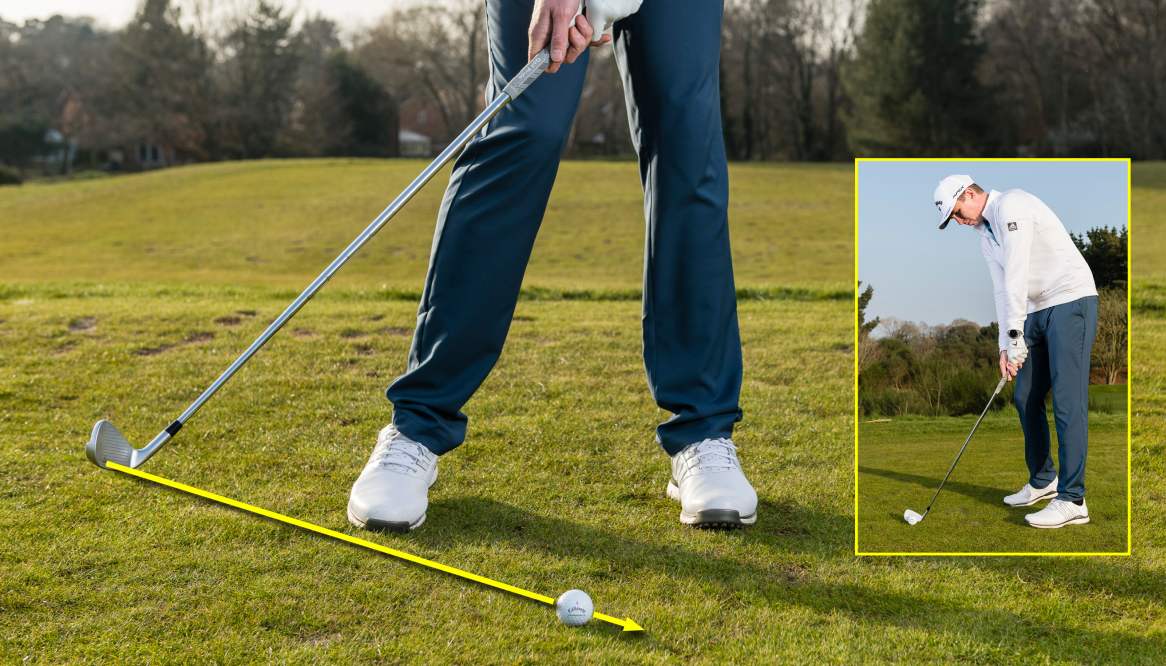
At setup, every golfer establishes an incline to the ground: the spine bends forward, the shoulders tilt down, and the hips hinge slightly back. This is your incline to the ground — the angle created between the upper body and the turf.
PGA Tour data shows that professionals average about 40° of forward shoulder bend at address. This number is not meant to be copied blindly, but it illustrates two important facts:
They bend enough to create space for the club to swing
More importantly, they maintain that relationship throughout the backswing
Elite players do not freeze their bodies and simply swing their arms. They rotate while preserving the sensation of staying inclined toward the ball. The key is that as the shoulders turn, the tilt closely matches the original forward bend.
How Much Shoulder Tilt Is Enough?
If you study slow-motion footage of tour players, you will notice that at the top of the backswing, the lead shoulder is significantly lower than the trail shoulder (for right-handed golfers), creating a steep tilt relative to the ground.
Here is the crucial insight:
If a player sets up with 40° of forward bend, their shoulder tilt at the top of the backswing is typically around 37° — a loss of only about 3°.
This relationship allows:
The head to remain relatively stable — neither lifting nor dipping
The spine to maintain a consistent rotational axis
The hips to rotate freely without drifting toward the ball
In other words, posture is not maintained by conscious effort. It is preserved because the shoulders rotate on the same inclined plane established at setup.
The Common Amateur Mistake: Turning the Shoulders Too Flat
Many amateur golfers make the opposite move.
Example: They set up with 40° of forward bend, but at the top of the backswing their shoulders tilt only 20–22°.
What happens then?
The backswing becomes extremely flat, rotating more around a horizontal axis
The head lifts up, the chin rises away from its original position
The hips and upper body straighten to “follow” the shoulder plane
This is the root cause of several familiar faults:
Early extension (hips moving toward the ball in the downswing)
An inconsistent low point
Thin shots one moment, fat shots the next
The swing turns into a chain of compensations rather than a structured motion. Many golfers believe they “lift their head to watch the ball,” when the real cause is actually shoulders turning too flat relative to the original bend.
The Key Is Relationship — Not Chasing a Number
Another common misunderstanding occurs when golfers hear that professionals have 37° of shoulder tilt and immediately try to force themselves into that position.
That is the trap.
The goal is not to reach a specific number. The goal is relative consistency.
If you set up with:
30° of forward bend, then 27° of shoulder tilt at the top is appropriate
If you attempt to force your shoulders to 37° while only bending 30° at address, your head will collapse toward the ball, the spine axis will shift in the opposite direction, and posture will still break down — just in a different way.
Practical Feels and Simple Drills for Golfers
For golfers without motion-capture tools, the most realistic approach relies on feel and video feedback.
Key sensations to focus on:
At setup, feel the chest bending toward the ball — not just knee flex
In the backswing, imagine the lead shoulder moving under the chin, not spinning flat around the neck
From a face-on video view:
Draw a horizontal line across your head at address
If your head clearly rises above that line at the top, your shoulders are almost certainly turning too flat
A simple drill:
Place an alignment stick along your spine (touching the back of the head, upper spine, and tailbone) in a bent-over posture
Practice turning the shoulders while keeping the stick aligned with the same inclined plane
The goal is to feel that as you rotate, your chest still points toward the ball — not upward toward the sky.
Connect These Two Numbers to Stabilize Your Swing
If you think of the golf swing as a system, the relationship between forward bend and shoulder tilt is a core variable in maintaining posture. You do not need to obsess over “bending more” or “keeping your head down.”
What you need is for the shoulders to rotate on the same inclined plane as your setup — losing only a few degrees, not collapsing or standing up dramatically.
When you understand and feel this relationship, you will not only fix early extension, but also build a foundation for:
A more consistent low point
Cleaner ball contact
More predictable ball flight and distance
At that point, the swing stops being a series of emergency fixes and becomes a structured, logical motion — aligned with the essence of modern golf: technique guided by understanding and data, not vague feel alone.
GolfEdit.com



Comments
You must be logged in to comment.