






Vietnam Golf Vision 2030
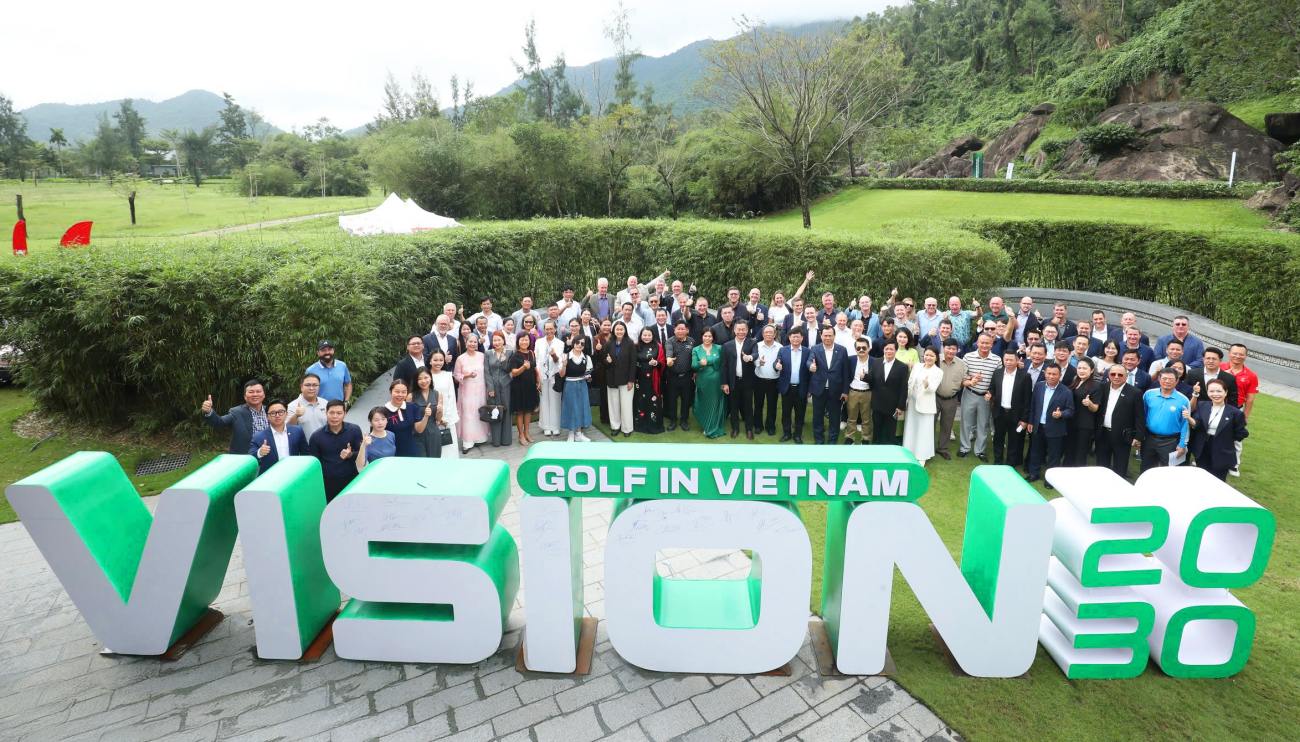
Golf – A Story of Vision and Identity
In his opening remarks, Mr. Hồ An Phong, Deputy Minister of Culture, Sports and Tourism, emphasized:
“Golf is no longer just a sport. It is an integral part of Vietnam’s strategy for developing high-quality and sustainable tourism.”
By 2030, golf is envisioned as a premium tourism product and an integrated cultural–sport–economic sector. It will not only attract players, but also serve as a platform for training professionals, hosting international tournaments, and building destinations that express Vietnamese identity.
In this new vision, each golf course is more than a place to play — it becomes a symbolic piece of the national brand, showcasing Vietnam’s hospitality, landscapes, local culture, and spirit of refinement.
The Deputy Minister also encouraged regional linkages to establish “National Golf Destination Clusters”, with Central Vietnam — especially Hue — positioned to become the hub of integrated golf, wellness, and cultural tourism.
Through this strategy, Vietnam aims to build “Golf Vietnam” as an internationally recognized destination brand.
Golf as the Beginning of a Greater Vision
Delivering the keynote address, Mr. Jed Moore, Founder and CEO of 54 Group, one of Asia’s leading voices in golf strategy, offered a bold perspective:
“Golf is not the destination. Golf is the starting point.
It is the spearhead of a national sports strategy — one that can reshape the economy, elevate the nation’s image, and inspire future generations.”
Moore emphasized that the global sports landscape is shifting rapidly — from capital flows and business models, to how audiences consume sports content.
In this evolving environment, Vietnam must take a distinctive approach: to view golf not as an isolated sector, but as a catalyst for tourism, education, technology, and community development.
He concluded with conviction:
“If we remain committed to this vision — with seriousness, unity, and a clear roadmap — Vietnam can absolutely be recognized as a Global Sports Nation by 2040.”
His remarks resonated as a manifesto for Vietnam’s golf transformation — from an emerging industry to a symbol of national synergy and strategic vision.
- The Power of Alignment and Purposeful Action
- The summit’s discussions revolved around three strategic pillars:
- Shaping Vietnam’s National Golf Strategy
- Promoting Sustainable Golf Development
Elevating the 5-Star Golf Experience – Toward a National Rating System
These pillars form the foundation of the 2030 vision: to establish Vietnam as a leading golf destination, where quality, culture, and sustainability define the standard.
Panel discussions brought together representatives from the Ministry of Culture, Sports and Tourism, the Vietnam Golf Association (VGA), and experts from England Golf, the European Golf Course Owners Association, LIV Golf & Asian Tour, Toro, Club Car, Faldo Design, and other global partners.
The shared conclusion: the true value of a golf destination lies not in individual courses, but in the ability to connect them into a cohesive, world-class experience.
Vietnam’s competitiveness will depend on governance transparency, standardized quality, and long-term planning — not on short-term expansion.
The summit also discussed the roadmap to develop 100 new golf courses between 2025 and 2035, while ensuring environmental stewardship and sustainable growth.
The message was clear: speed must never come at the cost of sustainability.
Media – The Bridge to Global Recognition
From a communication perspective, Rick Shiels, LIV Golf Ambassador and one of the world’s most influential golf content creators, offered an equally transformative message:
“Golf must become part of everyday life — not just a sport.
When people, especially the younger generation, see golf as a lifestyle, that’s when a nation’s image truly rises.”
He pointed out that Vietnam has unique storytelling assets — breathtaking courses, distinctive cultural backdrops, and a growing community of passionate young golfers.
The key lies in how those stories are told, using modern media and emotional connection to bring “Vietnamese golf” closer to the global audience.
Hue – The Cultural Heart of Vietnam’s Golf Identity
Speaking on behalf of the host city, Mr. Nguyễn Thanh Bình, Standing Vice Chairman of the Hue People’s Committee, reaffirmed the city’s commitment to developing golf tourism in harmony with cultural preservation and sustainable growth.
Hue — the land of imperial heritage and poetic landscapes — holds a rare advantage to become the golf capital of Central Vietnam.
Here, every swing becomes a cultural journey, blending heritage, nature, and the Vietnamese spirit.
With Laguna Lăng Cô — a world-class course designed by Sir Nick Faldo and repeatedly named among Asia’s finest — Hue is emerging as a strategic cornerstone of Vietnam’s national golf map, linking world-class play with authentic local experience.
From Vision to Action – Vietnam’s Path to Global Integration
VNGOS 2025 concluded not merely with commitments, but with a renewed sense of purpose:
Vietnam will not stop at being Asia’s leading golf destination — it will strive to redefine the role of sport as a driver of economic, cultural, and national identity development.
From swings on the fairway to policies at the national level, golf is becoming a shared language, connecting governments, investors, tourism, and communities to write the next chapter of
“Vietnam Golf – From Identity to Global Strength.”
Vietnam Golf Vision 2030 is more than a plan for sports development — it is a national vision, where golf becomes a symbol of Vietnam’s sophistication, creativity, and integration into the global era.


Comments
You must be logged in to comment.