






10 golf club myths golfers must forget if they want to play better

Many Vietnamese golfers still play based on handed-down beliefs—what friends say, what they see others using, or “truths” that were formed 20 or even 30 years ago. Meanwhile, modern clubfitting and performance data reveal an uncomfortable reality:
Most of what golfers believe about golf clubs is simply wrong.
Below are the 10 most common myths—and why continuing to believe them will only make golf harder than it needs to be.
1. “I’m not good enough to get fitted”
This is the most common—and most damaging—belief.
The truth is simple: the more average the golfer, the more fitting matters.
Skilled players can adapt to poorly fitted clubs. Recreational golfers cannot.
When clubs don’t fit: you fight the club instead of swinging freely, you change your swing to compensate those compensations eventually become long-term swing flaws
In Vietnam, it is common to see golfers who: slice but use shafts that are too stiff, launch the ball too low yet reduce loft, struggle with distance control but buy clubs based on online reviews
Fitting is not about making your swing look better instantly. It is about: eliminating unnecessary errors, allowing your current swing to perform at its best
If you can launch the ball consistently into the air, you are ready for fitting.
2. Stronger lofts always mean more distance
This myth costs Vietnamese golfers more distance than almost any other. Launch monitor data consistently shows: reducing loft increases ball speed but often reduces launch angle and carry distance
Most Vietnamese golfers: have moderate swing speed, do not generate enough spin, need more loft, not less
That’s why: a 6-iron often flies farther than a 4-iron, a 3-wood flies farther than a poorly fitted driver
Distance does not come from “less loft.” It comes from: proper launch angle, optimal spin, time spent in the air
3. A 3-wood off the tee is safer than a driver
Data shows a 3-wood hits slightly more fairways—but at a cost of nearly 20 yards on average.
In Vietnam, where: fairways are not excessively narrow, rough is rarely extremely penal, losing distance usually hurts more than missing the fairway.
More importantly: modern drivers have higher MOI, more stable faces, greater adjustability
A properly fitted driver is often more accurate than a 3-wood for recreational golfers.
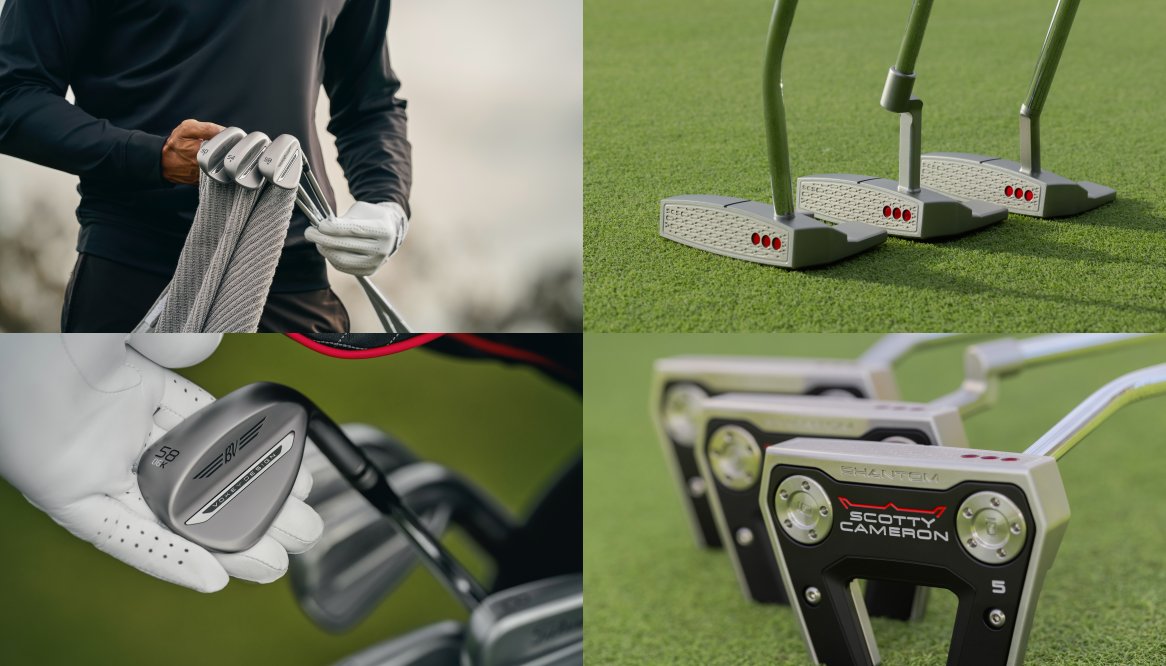
4. Mallet putters are for straight strokes
This is not true—and not complete. Modern mallet putters come in: face-balanced, slight toe-hang, heavy toe-hang configurations
Putter fitting consistently shows: head shape is only part of the equation, aim tendencies and impact behavior matter far more
Many Vietnamese golfers struggle on the greens not because of stroke mechanics, but because: they aim poorly, their setup is inconsistent, they choose putters for looks instead of function
A good putter is one that helps you aim correctly and return the face square at impact, regardless of whether it is a mallet or a blade.
5. The shaft is the “engine” of the club
No. The golfer is the engine. The clubhead determines: launch, spin, forgiveness
The shaft’s role is to: transfer energy, fine-tune feel and timing
Fitting data shows: changing the clubhead creates major performance changes, changing the shaft creates more subtle refinements
If you must prioritize: The right clubhead matters more than an expensive shaft.
6. All wedges should have the same bounce
This idea is nearly impossible to apply in Vietnam.
Vietnamese golfers play on: soft and firm sand, Bermuda and Zoysia fairways, highly variable lies
Each wedge serves a different purpose: full shots, chipping, bunker play. Bounce should be chosen based on how you use each wedge, not because they come as a set.
7. The sweet spot of the driver is the center of the face
Not necessarily. For many golfers: impact slightly above center reduces spin, increases carry distance
This is especially true for golfers who: generate excessive spin, launch the ball too low. Trying too hard to strike the exact center can actually reduce performance.
8. Everyone needs 14 clubs in the bag
No. Many Vietnamese golfers: do not generate enough speed, have overlapping distances, carry clubs “just to fill the bag”
A good set is one that: has no redundant distances, has no unused clubs. Twelve properly spaced clubs are often better than fourteen unnecessary ones.
9. Forged irons feel better, cast irons are more forgiving
Modern testing tells a different story. Blind tests consistently show: golfers cannot reliably distinguish forged from cast, feel is determined by overall design, not manufacturing method
Today: forged irons are no longer difficult to hit, cast irons are no longer harsh or lifeless
10. Once you know your specs, you don’t need fitting again
Wrong. Golfers change over time: physical condition, swing pattern
speed
feel
Manufacturers also change:
loft
lie
center of gravity
face technology
Every time you add a club or change brands, you should reassess the fit.
Final Thought
Modern golf is about:
data
fitting
understanding equipment correctly
Many Vietnamese golfers make golf harder than it needs to be simply by believing what “everyone says.”
If you want to play better:
Don’t ask what others are using.
Ask what fits you.
GolfEdit.com



Comments
You must be logged in to comment.